What is Old Bay seasoning?
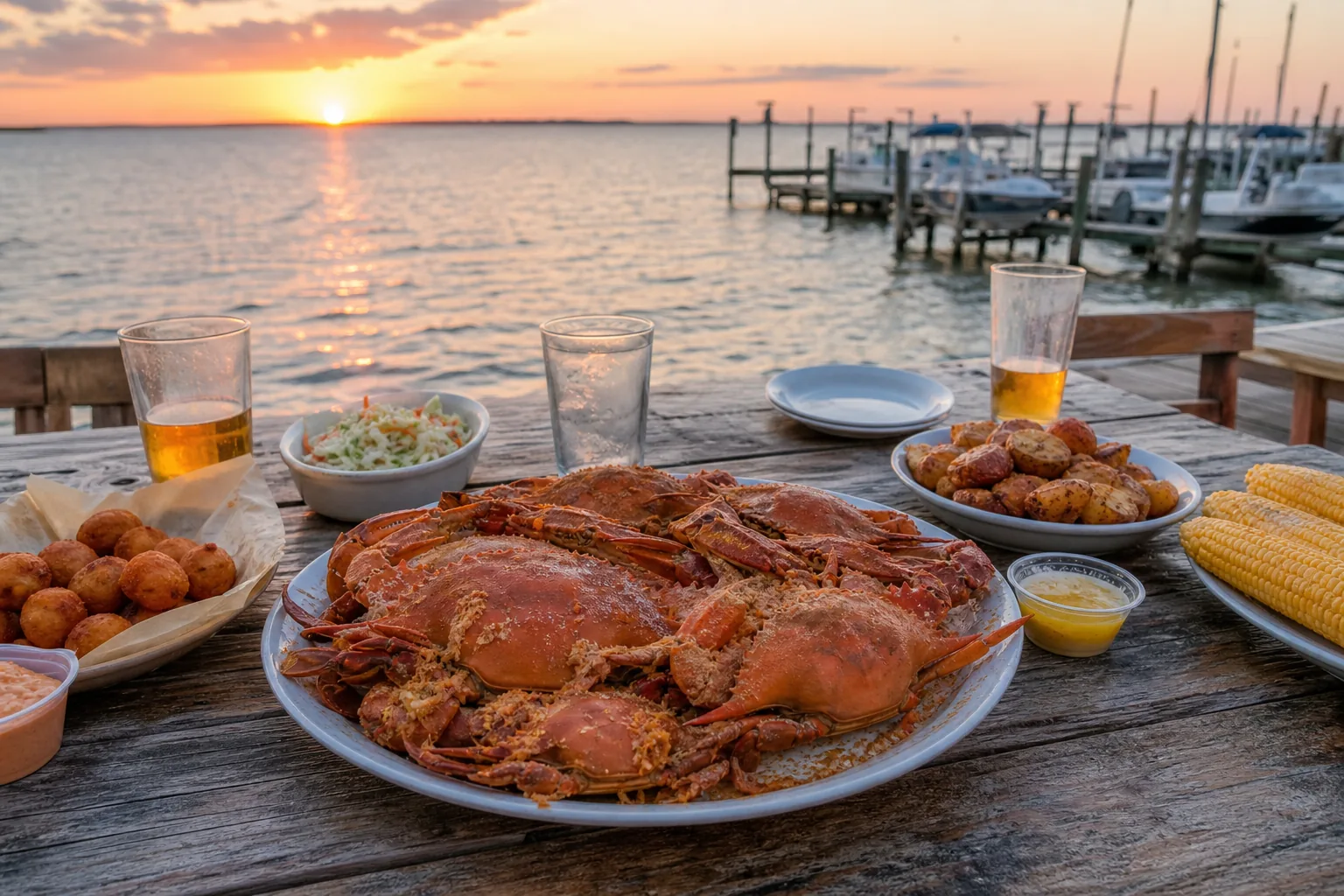
Old Bay is the celery-salt and paprika blend developed in Baltimore in the 1940s, now inseparable from Maryland seafood. It coats a steamed crab. It also turns up on shrimp, corn, fries, popcorn, chips, and the rims of drinks across the state. On a crab, the seasoning is part of the eating experience: it stays on the shell, so the flavor comes from your hands as much as from the meat, which is why a crab house table ends up seasoned along with the food.
Also called: Old Bay.
Why crab houses steam with it
Crabs are steamed in layers with heavy seasoning between them, so the spice adheres to the shell rather than penetrating the meat. That is the intended design. It also means the experience is salty and messy by nature, and that a crab house will happily steam lighter on request if someone at the table is sensitive to salt.
Where else you will meet Old Bay
Boardwalk fries, shrimp boils, corn on the cob, bloody marys, potato chips, plus a long tail of local products. Visitors often encounter it first on fries and only later on crab. Some places offer a hotter or a salt-reduced variant, and many kitchens use their own house blend rather than the commercial one.
Taking Old Bay home
It is sold in every grocery store in the region and makes a genuinely useful souvenir, more so than most beach-town purchases. It works on eggs, roasted vegetables, or popcorn as readily as on seafood, which is why Maryland kitchens keep it next to the salt.
How much seasoning to ask for
Standard steam
Choose it when: You want the traditional experience.
Tradeoff: Very salty on the hands and lips.
Light seasoning
Choose it when: Children, or anyone watching sodium.
Tradeoff: Less of the flavor people come for.
Extra on the side
Choose it when: You want control over each crab.
Tradeoff: Not how the steam works; ask before ordering.
Current source: Ocean City Tourism food and drink. Fees, hours, posted rules: all of it moves without much notice, so confirm anything time-sensitive on the day you go.