What is a Maryland crab cake?
A Maryland crab cake is built around lump or jumbo lump blue crab meat with as little filler as the kitchen can manage. It gets bound lightly, then broiled or fried. The defining quality is visible chunks of meat rather than a uniform paste, and the seasoning is usually Old Bay-based with mustard and a light binder. It is the standard way to eat Maryland crab without committing to a two-hour steamed-crab table, and it is served everywhere from dockside counters to white tablecloths.
Also called: crab cake, crab cakes.
Broiled or fried
Broiled is traditional here. It lets the crab lead. Fried adds a crust and reads as more of a sandwich filling. Neither is wrong; asking which the kitchen does well is a fair question, and the answer often reveals whether the cake is made in-house.
Reading the menu
Terms like jumbo lump, lump, backfin, and claw describe the grade of meat, roughly from largest and most expensive to smallest and most flavorful. A cake advertising jumbo lump should show it. Price tracks grade closely, and a very cheap crab cake in a coastal town is usually telling you which grade it uses.
When to order a crab cake
When the group includes children, someone who does not want to pick crabs, or anyone on a schedule. It is also the safer order at lunch, since a steamed crab meal effectively ends the afternoon. Many visitors do both across a week: cakes for a normal meal, steamed crabs as the anchor of one evening.
Crab cake decisions
Broiled, jumbo lump
Choose it when: You want the traditional version and the crab to lead.
Tradeoff: Highest price on most menus.
Fried, on a sandwich
Choose it when: Casual lunch, dockside or boardwalk-side.
Tradeoff: The crust competes with the crab.
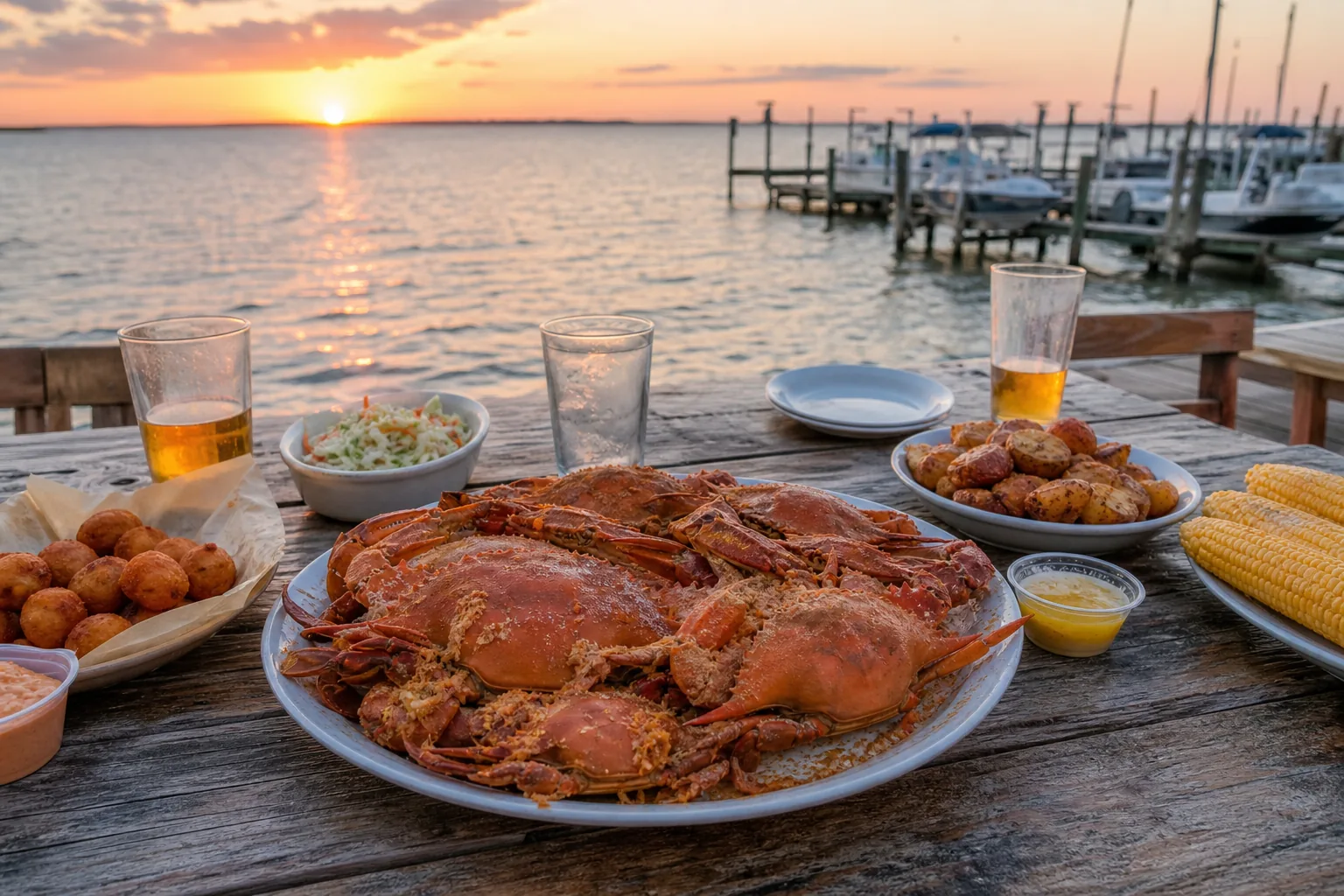
Steamed crabs instead
Choose it when: You have the evening and want the ritual.
Tradeoff: Two hours, mess, and market pricing.
Current source: Ocean City Tourism food and drink. Fees, hours, posted rules: all of it moves without much notice, so confirm anything time-sensitive on the day you go.