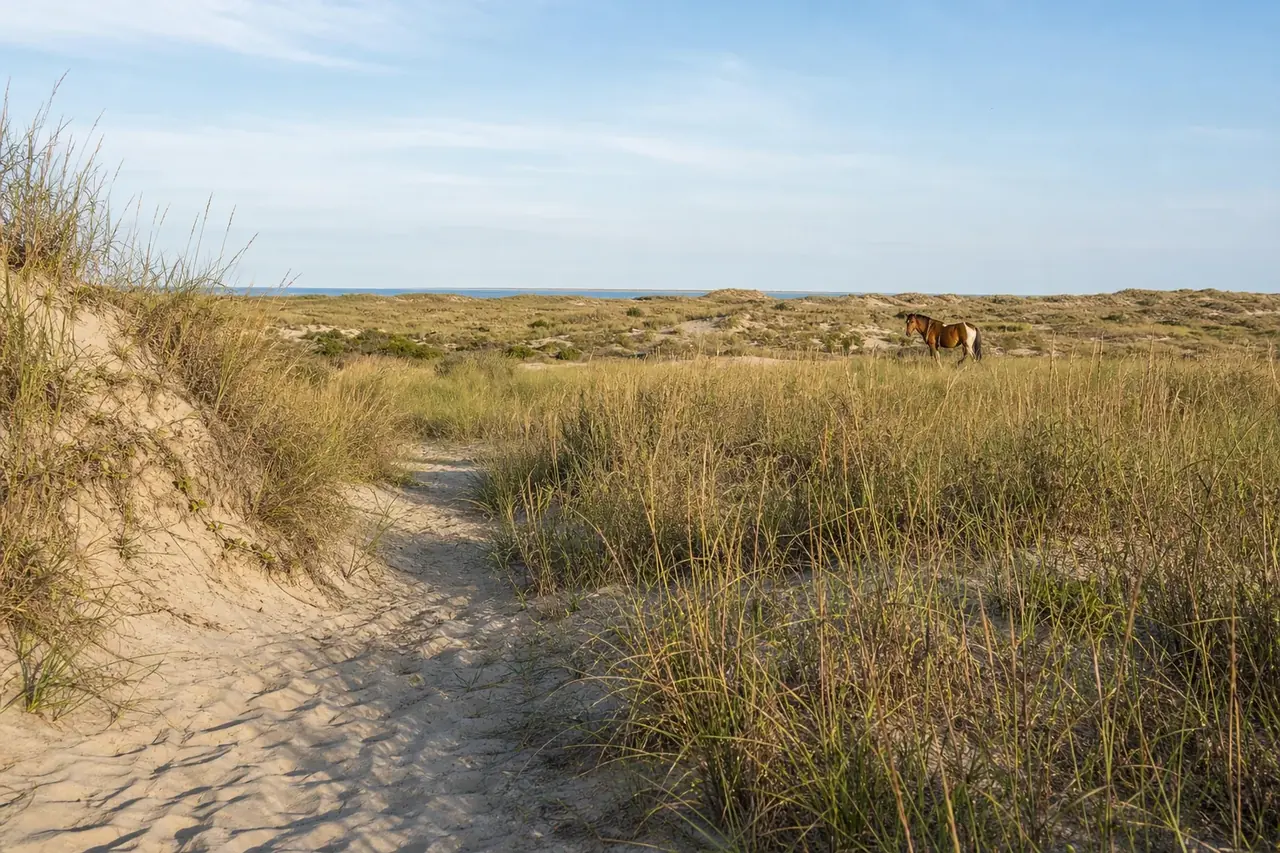
How do you view wildlife without unsafe behavior?
Wildlife content must replace “where to get close†with “how to observe well.â€
Assateague and the nearby towns offer a different coast entirely. The island trades Boardwalk density for dunes, marsh, surf, and open space. Berlin, West Ocean City, and other stops add food, history, or a change of pace. These places deserve their own travel time. They are not quick add-ons to a Boardwalk evening, and the drive, the rules, and the missing services all belong in the decision. The version worth choosing is whichever one leaves your group enough attention to enjoy the place instead of managing avoidable friction.
Treat the first decision as a filter. Ask what the day has to protect: time outside, an easy pace, a good meal, a weatherproof option, or a route you can leave early. Then read the choices below against that answer. Pick for the people who'll actually be there rather than for the option with the loudest promise.
Dune and marsh viewing with a longer lens
Take dune and marsh viewing with a longer lens when you want an obvious place to start.
It lets the group explore the coast without everyone wanting the same thing. Check two numbers. How long it takes, and how far apart the stops sit.
A beach day where horses are a possibility, not a promise
Weigh a beach day where horses are a possibility, not a promise against how far the group can comfortably walk before committing to it.
It lets the group enjoy the coast without everyone wanting the same thing. Check two numbers. How long it takes, and how far apart the stops sit.
A short trail combined with a low-pressure Ocean City evening
If you want one memorable outing with a practical backup close by, a short trail combined with a low-pressure ocean city evening is the one to book, and the rest of the day can stay loose.
It lets the group discover the coast without everyone wanting the same thing. Check two numbers. How long it takes, and how far apart the stops sit.
What changes when the outing leaves town?
Everything competes for the same limited hours. The beach wants a morning, the Boardwalk wants an evening, and anything outside town wants the whole afternoon, which is why naming attractions isn't enough on its own. What matters is where the activity fits and what it costs you later. You can visit a well-known place and still have a poor day if the route ignores heat, parking, or the next meal.
You're trading open space against convenience. A day trip buys a quieter, more natural experience and asks for more preparation and driving. Compare the group's appetite for distance against the kind of memory it wants. The comparison worth making is the one that leaves you prepared without spending the day preparing.
Confirm the fast-moving details with the official National Park Service things to do source linked below. Hours, prices, capacity, weather policy: none of those are permanent facts, and any page that pretends otherwise ages badly. Use this one as a framework. Then check the live detail on the morning you actually go, because that is the part a saved plan always gets wrong.
How do you earn the drive with the right stops?
Decide the reason for the trip before you pick the route. A beach day needs gear and hours. Wildlife needs patience, distance, and a willingness to see nothing. Hiking or biking needs water and a realistic pace against the wind. A nearby town suits visitors who want food, shops, and an indoor option. Keep one Ocean City backup in reserve.
Start with one anchor, not a list. Here it's usually dune and marsh viewing with a longer lens, the thing your group would be disappointed to miss. Put food and rest around it. Then add a lower-commitment alternative that can start early if you arrive ahead of schedule or the weather turns, which is what lets a group plan with structure and still enjoy the day.
Keep related stops in one district when you can. A Boardwalk activity pairs with beach access, a snack, or an evening walk. A bay outing pairs with a park or a sunset table. The drive to Assateague deserves its own block rather than a slot wedged between two reservations. Before you add another stop, weigh the walk, the parking, the bathrooms, and the shortest way out.
Group planning has one rule. Someone owns the next decision. Agree on where to meet, when to check the weather, and what happens if someone wants to stop. Couples can leave a long meal open instead of booking every hour. Large groups can split for a ride or a quiet break, then reconnect somewhere visible. The route works when you can change it without feeling like the day failed.
Use the trip-planning guide to connect Assateague wild horses guide with a neighborhood, transportation choice, or one- to three-day itinerary. Use the guide library to compare another audience, season, weather plan, or activity cluster. The 50-activity hub is there when someone wants another idea. Keep the anchor clear.
When do conditions make the biggest difference?
Leave early when heat, wildlife, or parking matters. Pack water, food, sun protection, insect protection. Services are limited once you are there. Check the National Park Service for current conditions, fees, closures. Wild horses are animals rather than attractions, so watch from a distance and secure your food. Use that to settle one question. Arrive early, reserve ahead, or keep the block loose?
Timing changes the experience more than the address does, which is why the same street end can feel like two different places at eight in the morning and six at night. Early hours leave a beach or a park quieter and cooler. Midday favors food, shade, or a planned reset indoors. Evening brings neon and a different crowd entirely. Weigh your group's energy against the destination's busiest hours, then take the window that makes the visit easier to enjoy rather than easier to photograph.
Book only what genuinely needs a reservation: a charter, a show, a guided activity, an event with limited capacity. Leave unbooked space around a beach day where horses are a possibility, not a promise so a late breakfast or a tired child doesn't turn into a penalty. If the plan depends on a current calendar, check it again the morning of. If it depends on water or storms, the official safety guidance outranks your itinerary.
What should you check before leaving the shoreline?
The checks below are what turn a good idea into a workable outing. Read them as decisions, not fine print. If one fails, take the nearby alternative rather than forcing the original plan.
- Follow NPS distance and food rules.
- Do not touch, feed, or surround horses.
- Check heat, insects, closures, and access before leaving town.
- Check the current forecast, event notice, operator calendar, or facility page on the day that matters.
- Compare the route with the least mobile, youngest, oldest, or most weather-sensitive person in the group.
- Book only what needs a reservation and keep one flexible option within the same district.
Current source: National Park Service things to do. Recheck high-volatility details within 30 days of an update; event dates, operator schedules, access conditions, prices, and safety guidance deserve a same-day check.
Search snippets and social clips are good for discovering assateague wild horses guide. They're poor at carrying the operating context. Use them to find the possibility, then confirm it with the destination itself, and you'll arrive when the experience is actually running and suited to the day.
assateague and day trips questions visitors ask
Which assateague and day trips option fits your group?
Dune and marsh viewing with a longer lens suits a group that wants a clear starting point and a steady pace. Check the timing first. Then compare how far apart the stops sit and how fast you can leave. That question gets sharper when someone in the group has an access, age, pet, or budget constraint. When the first choice doesn't fit, open the related guide that names your constraint directly.
What is the best backup for assateague and day trips plans?
If A beach day where horses are a possibility, not a promise isn't available, shift to A short trail combined with a low-pressure Ocean City evening or open the closest related guide. Keep the reason for the outing. Change only the activity. A beach plan becomes a Boardwalk or museum plan. A water outing becomes a park walk. A long day trip becomes a slower neighborhood route. The backup that works is the one protecting the reason you wanted to go out, even after the original activity stops being an option.
How can you keep assateague and day trips plans flexible?
Keep assateague wild horses guide flexible with one anchor, one companion activity nearby, and one exit. Leave room for food, for weather, for a rest. Let the gaps hold conversation, snacks, the unexpected stop that makes a trip feel personal. You don't have to choose every option here to have a good day. You need a route that leaves enough attention for the people you came with.